
Indian civilization and culture summary is one of the most important prose lessons prescribed in the Class 12 Bihar Board English syllabus. This chapter, written by Mahatma Gandhi, explains the true meaning of civilization and culture and highlights the moral and spiritual values of Indian life. Students preparing for board examinations often search for an easy and accurate indian civilization and culture summary to understand the chapter clearly and score good marks.
About the Author – Mahatma Gandhi
Mahatma Gandhi, जिनका पूरा नाम Mohandas Karamchand Gandhi था, का जन्म 2 October 1869 को Porbandar (Gujarat) में हुआ था। वे भारत के स्वतंत्रता संग्राम के महान नेता, विचारक और लेखक थे। उन्हें “Father of the Nation” कहा जाता है।
गांधी जी केवल एक राजनीतिक नेता नहीं थे, बल्कि एक moral philosopher और cultural thinker भी थे। उन्होंने अपने लेखों और भाषणों के माध्यम से भारतीय सभ्यता, संस्कृति, नैतिकता, अहिंसा और सत्य के महत्व को समझाया।
“Indian Civilization and Culture” में गांधी जी ने भारतीय संस्कृति की आत्मा, उसकी आध्यात्मिक सोच और उसकी श्रेष्ठता को सरल शब्दों में प्रस्तुत किया है।
Indian Civilization and Culture Summary (English – ~1000 Words)
Indian Civilization and Culture is a significant prose lesson written by Mahatma Gandhi and prescribed for Class 12 Bihar Board students. In this chapter, Gandhi explains the true nature of Indian civilization and culture and compares it with modern materialistic civilization. He highlights the moral, spiritual, and ethical values that form the foundation of Indian life.
Gandhi begins by clarifying the meaning of civilization and culture. According to him, civilization is not merely about material progress, machines, or physical comfort. True civilization refers to self-restraint, moral development, and control over desires. A civilization that encourages unlimited wants and luxury cannot be considered a true civilization.
Indian civilization, as explained by Gandhi, is one of the oldest civilizations in the world. It has survived for thousands of years because it is based on eternal values rather than temporary pleasures. While modern Western civilization focuses on material advancement, Indian civilization emphasizes simplicity, discipline, and spiritual growth.
One of the key ideas in Indian Civilization and Culture is that Indian culture teaches people to live in harmony with nature and society. It does not promote blind competition or exploitation. Instead, it stresses duty, truth, non-violence, and self-control. Gandhi strongly believes that self-control is the real test of civilization.
Religion plays an important role in Indian culture. However, Gandhi does not support blind faith or superstition. For him, religion means moral living and service to humanity. Indian religion teaches tolerance, respect for all faiths, and peaceful coexistence. The idea of “Vasudhaiva Kutumbakam”, meaning the world is one family, reflects the universal outlook of Indian culture.
Gandhi also discusses the concept of simple living and high thinking. Indian civilization does not encourage excessive use of machinery or dependence on material goods. He criticizes modern civilization for creating artificial needs and making humans slaves of machines. According to him, true happiness cannot be achieved through material wealth alone.
Another important aspect of Indian civilization is its village-based life. Gandhi believed that villages are the backbone of India. Indian culture grows in villages where people live simple lives, help one another, and follow moral values. Village life promotes cooperation, equality, and human dignity.
Education in Indian civilization is also value-based. It focuses not only on intellectual development but also on character-building. Ancient Indian education aimed at creating disciplined, honest, and responsible individuals.
Gandhi acknowledges that civilization must evolve, but he cautions against blindly adopting Western models. He believes that India should adopt modern developments only when they support moral and human values. Blind imitation of Western culture can erode the essence of Indian civilization.
In conclusion, Indian Civilization and Culture presents Gandhi’s vision of a morally strong and spiritually rich society. The chapter teaches students that true progress lies in ethical living, self-restraint, and service to others. Gandhi’s ideas remain relevant even today in a world facing moral and environmental crises.
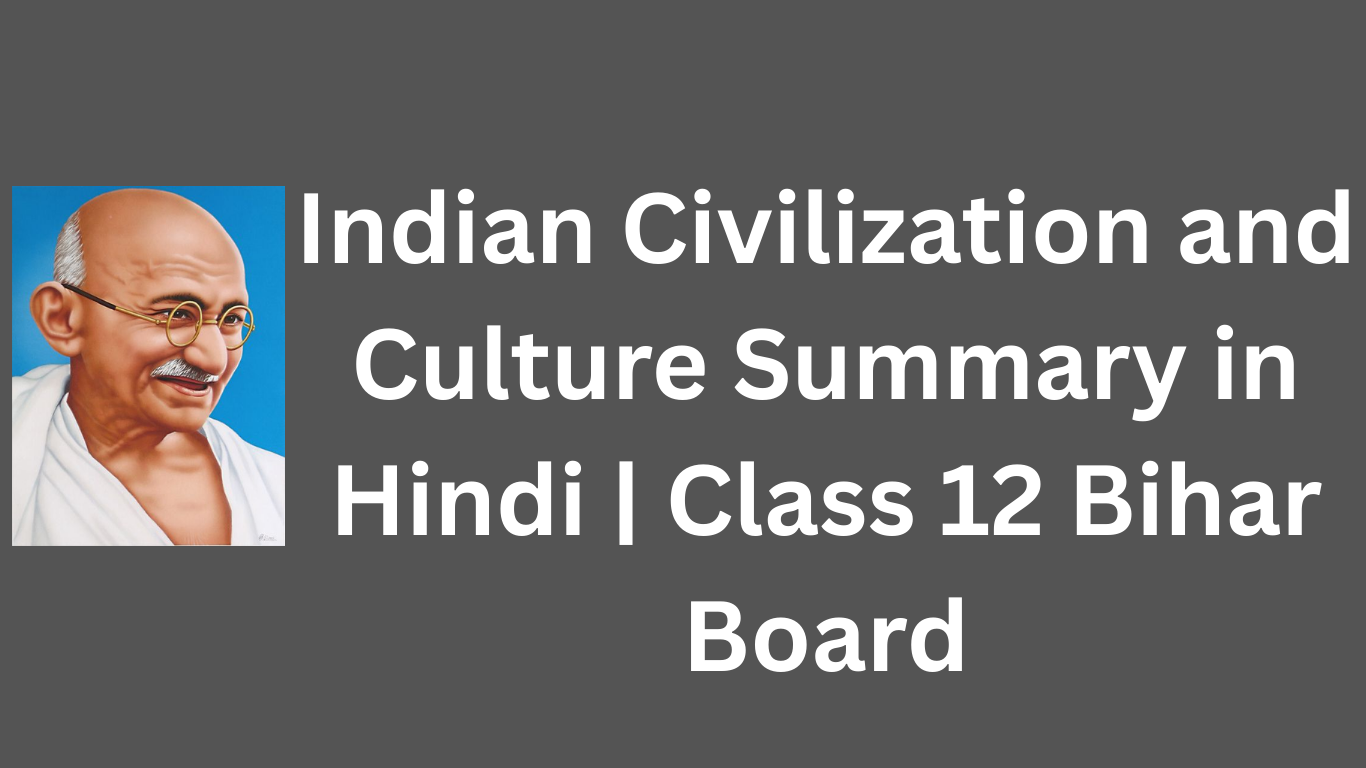
Indian Civilization and Culture Summary in Hindi (1000 Words)
“Indian Civilization and Culture” महात्मा गांधी द्वारा लिखा गया एक महत्वपूर्ण निबंधात्मक अध्याय है। इस अध्याय में गांधी जी ने भारतीय सभ्यता और संस्कृति की मूल भावना, उसके सिद्धांतों और उसकी विशेषताओं को स्पष्ट किया है। साथ ही उन्होंने आधुनिक भौतिकवादी सभ्यता की आलोचना करते हुए भारतीय संस्कृति की श्रेष्ठता को सिद्ध किया है। यह अध्याय केवल इतिहास नहीं बताता, बल्कि जीवन जीने की सही दिशा भी दिखाता है।
गांधी जी के अनुसार सभ्यता (Civilization) का अर्थ केवल भौतिक विकास नहीं है। आज के समय में लोग बड़ी इमारतों, मशीनों, उद्योगों और सुविधाओं को ही सभ्यता मान लेते हैं, लेकिन गांधी जी इस विचार से सहमत नहीं हैं। उनके अनुसार सच्ची सभ्यता वह है जो मनुष्य को आत्म-संयम, नैतिकता और कर्तव्यबोध सिखाए। जिस सभ्यता में मनुष्य अपनी इच्छाओं पर नियंत्रण नहीं रख पाता, वह सभ्यता विनाश की ओर जाती है।
भारतीय सभ्यता विश्व की सबसे प्राचीन सभ्यताओं में से एक है। यह हजारों वर्षों से जीवित है, क्योंकि इसकी नींव स्थायी मूल्यों पर रखी गई है। सिंधु घाटी सभ्यता से लेकर वैदिक काल तक भारत ने एक समृद्ध सामाजिक और सांस्कृतिक परंपरा विकसित की। गांधी जी मानते हैं कि भारतीय सभ्यता कभी केवल भौतिक सुखों के पीछे नहीं भागी, बल्कि उसने आत्मिक शांति और संतुलन को अधिक महत्व दिया।
भारतीय संस्कृति (Indian Culture) का आधार आध्यात्मिकता है। भारतीय संस्कृति मनुष्य को यह सिखाती है कि जीवन का उद्देश्य केवल धन, सुख और आराम नहीं है, बल्कि आत्मा की शुद्धि और नैतिक जीवन है। सत्य, अहिंसा, करुणा, प्रेम और सहिष्णुता भारतीय संस्कृति के मूल स्तंभ हैं। गांधी जी स्वयं अहिंसा और सत्य के मार्ग पर चलकर पूरी दुनिया के लिए उदाहरण बने।
गांधी जी आधुनिक पश्चिमी सभ्यता की कड़ी आलोचना करते हैं। उनके अनुसार आधुनिक सभ्यता मनुष्य को मशीनों का गुलाम बना रही है। यह सभ्यता अधिक से अधिक सुख-सुविधाएँ पैदा करती है, लेकिन मनुष्य को मानसिक शांति नहीं दे पाती। असीमित इच्छाएँ, उपभोग की प्रवृत्ति और भौतिक लालसा मनुष्य को नैतिक रूप से कमजोर बना रही हैं। गांधी जी मानते हैं कि ऐसी सभ्यता लंबे समय तक टिक नहीं सकती।
भारतीय सभ्यता का एक महत्वपूर्ण गुण आत्म-संयम है। गांधी जी कहते हैं कि इच्छाओं पर नियंत्रण रखना ही सच्ची सभ्यता की पहचान है। भारतीय संस्कृति मनुष्य को सादगी से जीवन जीना सिखाती है। “सादा जीवन, उच्च विचार” भारतीय सभ्यता का मूल मंत्र है। व्यक्ति जितना कम भौतिक सुखों में फंसा रहेगा, उतना ही वह नैतिक और आत्मिक रूप से मजबूत बनेगा।
धर्म भारतीय सभ्यता में महत्वपूर्ण स्थान रखता है, लेकिन गांधी जी धर्म को अंधविश्वास या कर्मकांड नहीं मानते। उनके अनुसार धर्म का अर्थ है नैतिक जीवन और कर्तव्य पालन। भारतीय धर्म सहिष्णुता सिखाता है। यहाँ सभी धर्मों को समान सम्मान दिया जाता है। “वसुधैव कुटुम्बकम्” अर्थात पूरी दुनिया एक परिवार है—यह विचार भारतीय संस्कृति की उदारता को दर्शाता है।
भारतीय सभ्यता की एक और विशेषता है सह-अस्तित्व और सहिष्णुता। भारत में अनेक धर्म, भाषाएँ, जातियाँ और परंपराएँ हैं, फिर भी यहाँ एकता बनी हुई है। गांधी जी मानते हैं कि विविधता में एकता भारत की सबसे बड़ी शक्ति है। भारतीय संस्कृति किसी पर अपने विचार थोपने में विश्वास नहीं रखती।
गांधी जी भारतीय ग्राम्य जीवन को अत्यंत महत्वपूर्ण मानते हैं। उनके अनुसार भारत की आत्मा गाँवों में बसती है। गाँवों में सरल जीवन, पारस्परिक सहयोग और मानवीय संबंध अधिक मजबूत होते हैं। ग्राम आधारित जीवन मनुष्य को स्वावलंबी, ईमानदार और नैतिक बनाता है। गांधी जी उद्योगों और मशीनों के अंधाधुंध प्रयोग के विरोधी थे क्योंकि इससे बेरोजगारी और असमानता बढ़ती है।
शिक्षा के विषय में गांधी जी का दृष्टिकोण भी नैतिक है। भारतीय शिक्षा प्रणाली का उद्देश्य केवल नौकरी पाना नहीं, बल्कि चरित्र निर्माण होना चाहिए। प्राचीन भारतीय शिक्षा पद्धति व्यक्ति को आत्मनिर्भर, अनुशासित और समाजोपयोगी बनाती थी।
गांधी जी यह स्वीकार करते हैं कि समय के साथ परिवर्तन आवश्यक है, लेकिन वे अंधानुकरण के पक्ष में नहीं हैं। भारत को पश्चिम से वही अपनाना चाहिए जो नैतिक और मानवीय मूल्यों के अनुकूल हो। यदि भारत अपनी संस्कृति को छोड़ देगा, तो उसकी आत्मा नष्ट हो जाएगी।
अंत में गांधी जी यह स्पष्ट करते हैं कि भारतीय सभ्यता केवल अतीत की वस्तु नहीं है, बल्कि आज भी उतनी ही प्रासंगिक है। आज जब दुनिया हिंसा, तनाव और नैतिक पतन से जूझ रही है, तब भारतीय संस्कृति के मूल्य मानवता के लिए मार्गदर्शन बन सकते हैं।
इस प्रकार, “Indian Civilization and Culture” हमें यह सिखाता है कि सच्ची प्रगति भौतिक नहीं, बल्कि नैतिक और आत्मिक होती है। यह अध्याय छात्रों को जीवन के सही मूल्य समझने और एक जिम्मेदार नागरिक बनने की प्रेरणा देता है।
5 Objective Questions (with Answers)
- Who is the author of the lesson “Indian Civilization and Culture”?
Answer: Mahatma Gandhi - According to Gandhi, what is the true test of civilization?
Answer: Self-control and moral restraint - Indian civilization mainly emphasizes —
Answer: Spiritual and moral values - What does “Vasudhaiva Kutumbakam” mean?
Answer: The world is one family - Which civilization does Gandhi criticize in the lesson?
Answer: Modern materialistic (Western) civilization
Indian Civilization and Culture Summary in Hindi | Class 12
5 Short Answer Questions of Indian Civilization and Culture Summary
- What is meant by true civilization, according to Gandhi?
According to Gandhi, true civilization means self-restraint, control over desires, and moral development, not material comfort or luxury. - Why does Gandhi criticize modern civilization?
Gandhi criticizes modern civilization because it encourages unlimited wants, materialism, and dependence on machines, which weaken moral values. - What role does spirituality play in Indian civilization?
Spirituality forms the foundation of Indian civilization and guides people towards inner peace, self-discipline, and ethical living. - What is the significance of “Vasudhaiva Kutumbakam” in Indian culture?
It shows the spirit of universal brotherhood and teaches tolerance and peaceful coexistence. - Why does Gandhi support village life?
Gandhi supports village life because it promotes simplicity, cooperation, moral values, and human dignity.
Conclusion: Indian Civilization and Culture Summary
indian civilization and culture summary helps Class 12 students understand the true spirit of Indian civilization as explained by Mahatma Gandhi. The chapter emphasizes self-control, morality, spirituality, and simple living as the foundation of true progress. This lesson is not only important for examination purposes but also for building character and ethical values in students’ lives.
FAQs – Indian Civilization and Culture Summary
Q1. Who is the author of Indian Civilization and Culture?
Mahatma Gandhi is the author of Indian Civilization and Culture.
Q2. What is the Indian Civilization and Culture summary about?
The chapter explains the moral, spiritual, and ethical values of Indian civilization and criticizes modern materialistic civilization.
Q3. Why is Indian Civilization and Culture important for Class 12?
It is important because it is exam-oriented and teaches moral values, self-control, and the true meaning of civilization.
Q4. What does Gandhi say about modern civilization?
Gandhi criticizes modern civilization for promoting materialism and a lack of moral restraint.
Q5. What is the central idea of Indian Civilization and Culture?
The central idea is that true civilization lies in self-control, spirituality, and ethical living.
Indian Civilization and Culture Subjective Question Answer